Escort Services in Russia: Legal Reality and Social Context
 Dec, 2 2025
In Russia, the line between legal and illegal activity around adult companionship is blurry at best. While prostitution itself isn’t technically illegal, almost every activity that supports it-advertising, operating a brothel, or even arranging meetings through third parties-is banned under federal law. This creates a system where demand exists, but supply operates in shadows. Many women who offer companionship services do so under the guise of "modeling," "tour guiding," or "dating consultant" roles. The term "escort" is rarely used openly, but it’s the word people whisper in private messages and encrypted apps. Outside major cities like Moscow and St. Petersburg, these services are even more hidden, often relying on word-of-mouth referrals or closed social media groups.
Some people searching for companionship abroad stumble upon sites like esvort girl paris, curious about how other countries handle similar services. Paris has its own legal gray zones, where escort agencies operate under strict rules that Russia doesn’t even pretend to follow. In Russia, there’s no formal licensing, no health checks mandated by law, and no protection for workers. What you see online-photos, profiles, rates-is often curated by someone else, not the person offering the service.
How the System Actually Works
Most Russian escort services run through small, independent operators. There are no big companies like in some Western countries. Instead, you’ll find women working alone or in loose networks of two or three others. They use Telegram channels, VKontakte groups, or private Instagram accounts to share photos and contact details. Payment is usually cash or cryptocurrency. Many avoid bank transfers entirely to avoid leaving a digital trail. Some clients come from within Russia; others are foreign tourists or business travelers who don’t understand the risks.
One common setup involves a woman renting a short-term apartment in a quiet neighborhood. She lists herself as a "language tutor" or "cultural companion" to avoid suspicion. When a client arrives, the interaction is framed as a dinner, a walk, or a movie night. The line between companionship and sex is never written down, but everyone knows what’s expected. This ambiguity is intentional-it lets both parties deny any wrongdoing if questioned.
Who Are the Women Involved?
There’s no single profile. Some are students trying to pay off tuition. Others are single mothers with no social safety net. A few are former models or dancers who found the income too tempting to walk away from. A small number are trafficked or coerced, though exact numbers are impossible to verify. Russian authorities don’t track these cases systematically. NGOs that try to help often lack funding or legal backing.
Many women say they chose this work because it pays more than double what they’d make as a cashier, receptionist, or teacher. In cities like Yekaterinburg or Kazan, monthly salaries for office jobs hover around 40,000 rubles ($450 USD). An escort might earn the same in one night. The trade-off? Constant fear of arrest, social stigma, and the risk of violence from clients or corrupt police.
The Role of Police and Corruption
Police don’t raid escort services to shut them down-they raid them to collect bribes. It’s a well-documented pattern. A woman might get a call from someone claiming to be a client, only to find two officers at the door. They don’t arrest her right away. They ask for money. Sometimes it’s 5,000 rubles. Sometimes it’s 20,000. If she pays, they leave. If she refuses, they take her to the station, confiscate her phone, and threaten to charge her with organizing prostitution-even if she’s working alone.
Foreign clients aren’t immune. There have been cases where tourists were detained, fined, and deported after being caught in a sting operation. These operations are rarely about public safety. They’re about extracting money from people who have no legal recourse.
Why the Legal Gray Zone Persists
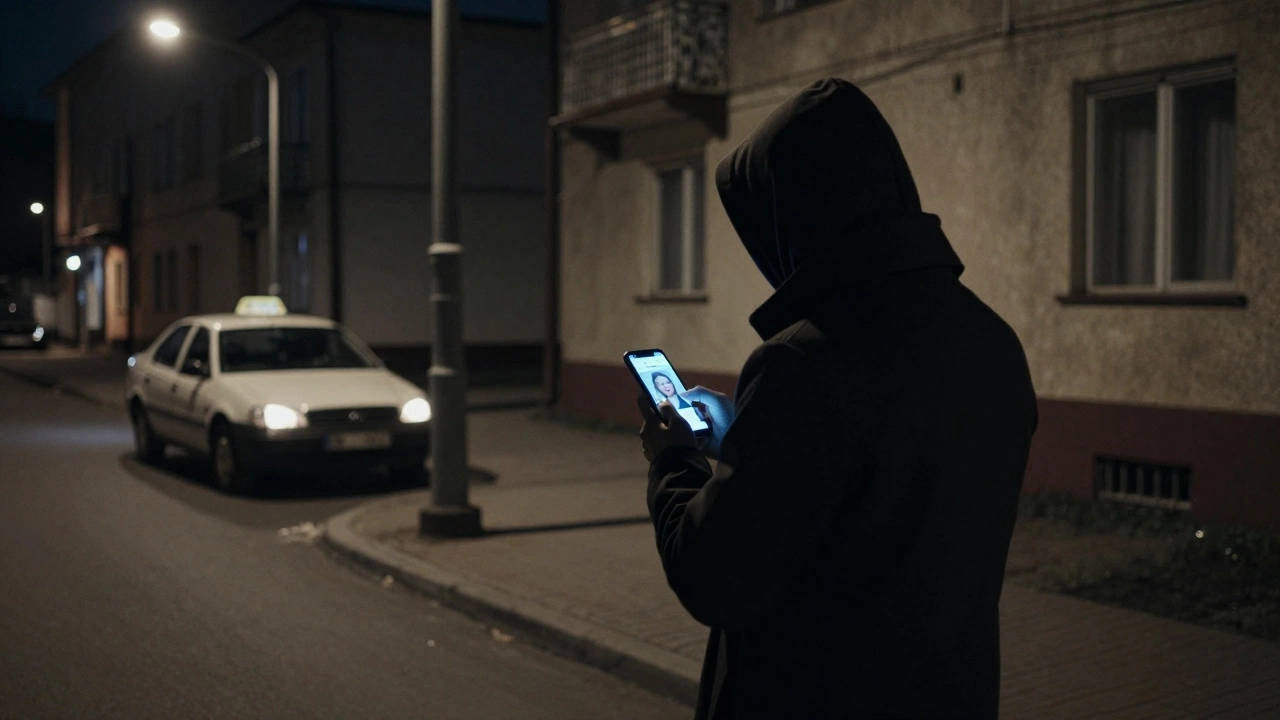
The Russian government doesn’t want to legalize escort services. Doing so would force them to acknowledge the scale of the problem-and the failure of social policies that push women into these roles. At the same time, they can’t fully crack down. Too many people benefit from the system: landlords who rent apartments, taxi drivers who ferry clients, cleaners who tidy up after visits, and even online platforms that host ads.
There’s also a cultural layer. In conservative parts of Russia, admitting you’ve used an escort is seen as shameful. That silence protects the industry. No one reports it. No one demands change. The women who do this work are invisible-not because they’re hidden, but because society refuses to see them as anything other than criminals or victims.
What Happens When You Get Caught?
If you’re a client and you’re arrested, the punishment is usually a fine-between 2,000 and 5,000 rubles for a first offense. Repeat offenders might face up to 15 days in jail. For the woman, the consequences are worse. She could be fined, forced to attend a "re-education" program, or even lose custody of her children if she’s a parent. There’s no legal defense system designed to protect her. Public defenders don’t specialize in these cases. Lawyers who do take them often charge high fees, and many women can’t afford them.
One woman in Novosibirsk told a journalist in 2024 that she was arrested three times in two years. Each time, she paid a bribe. The third time, she couldn’t afford it. She spent 10 days in detention. When she got out, her landlord kicked her out. Her phone was seized. She lost contact with every client. She now works in a warehouse.
Online Ads and the Illusion of Safety
Most ads look professional. Clean photos. Polished bios. Some even include testimonials. But these aren’t verified. There’s no way to know if the person in the photo is the one you’ll meet. Many profiles are run by managers or pimps. Some women are forced to post content they didn’t agree to. Others are victims of deepfake technology-someone took their old photos and used them to create fake profiles.
There’s also the issue of scams. Clients sometimes pay upfront and never get a meeting. Women sometimes take money and disappear. Without legal contracts, there’s no recourse. That’s why many clients insist on meeting in public places first. But even that doesn’t guarantee safety. In 2023, a man in Sochi was robbed at gunpoint after meeting an escort he found online. The police refused to file a report because he was involved in an illegal activity.

The Language of Secrecy
You won’t find the word "escort" in Russian ads. Instead, you’ll see phrases like "companionship services," "evening entertainment," or "personal assistant." Some use coded language: "I love long walks and coffee dates" or "I travel often and enjoy meeting new people." These are signals. They’re understood by those who know what to look for.
On Telegram, channels use names like "Moscow Evening" or "St. Petersburg Social". They post photos without captions. The comments section is the real marketplace. People ask questions like, "Is she available Thursday?" or "What’s the rate for 2 hours?" The answers come in private messages. No one speaks openly.
International Comparisons
Compare this to places like Germany or the Netherlands, where sex work is regulated and taxed. Workers there have access to healthcare, legal aid, and unions. In Russia, none of that exists. Even in countries with strict laws, like the U.S., some states allow regulated brothels. Russia doesn’t even have that option.
That’s why some Russian women try to move abroad. A few make it to places like Turkey or Georgia, where enforcement is looser. Others end up in Eastern Europe, working under worse conditions. A few even make it to Western Europe-but they’re often exploited by trafficking rings that promise safety and end up trapping them in debt.
There’s a reason you’ll see phrases like eacorts in paris or escort girle paris pop up in Russian search results. People are looking for alternatives. They want to know if life is safer somewhere else. The truth? It’s not. It’s just different.
What Should You Do If You’re Considering This?
If you’re a foreigner thinking about hiring an escort in Russia, understand this: you’re entering a system designed to exploit both sides. You’re not just risking legal trouble-you’re supporting a structure that harms vulnerable women. Even if you treat them with respect, your money feeds a cycle of fear and control.
If you’re a woman considering this work, know that there are alternatives. Some NGOs offer emergency housing, job training, and psychological support. They’re hard to find, but they exist. Reach out to organizations like "New Life" in Moscow or "Women’s Help Line" in St. Petersburg. They don’t judge. They don’t report you to police. They just help.
There’s no easy fix. The law won’t change overnight. But awareness can. Every time someone chooses to see these women as people-not just a service, not just a crime-they chip away at the silence that keeps the system alive.